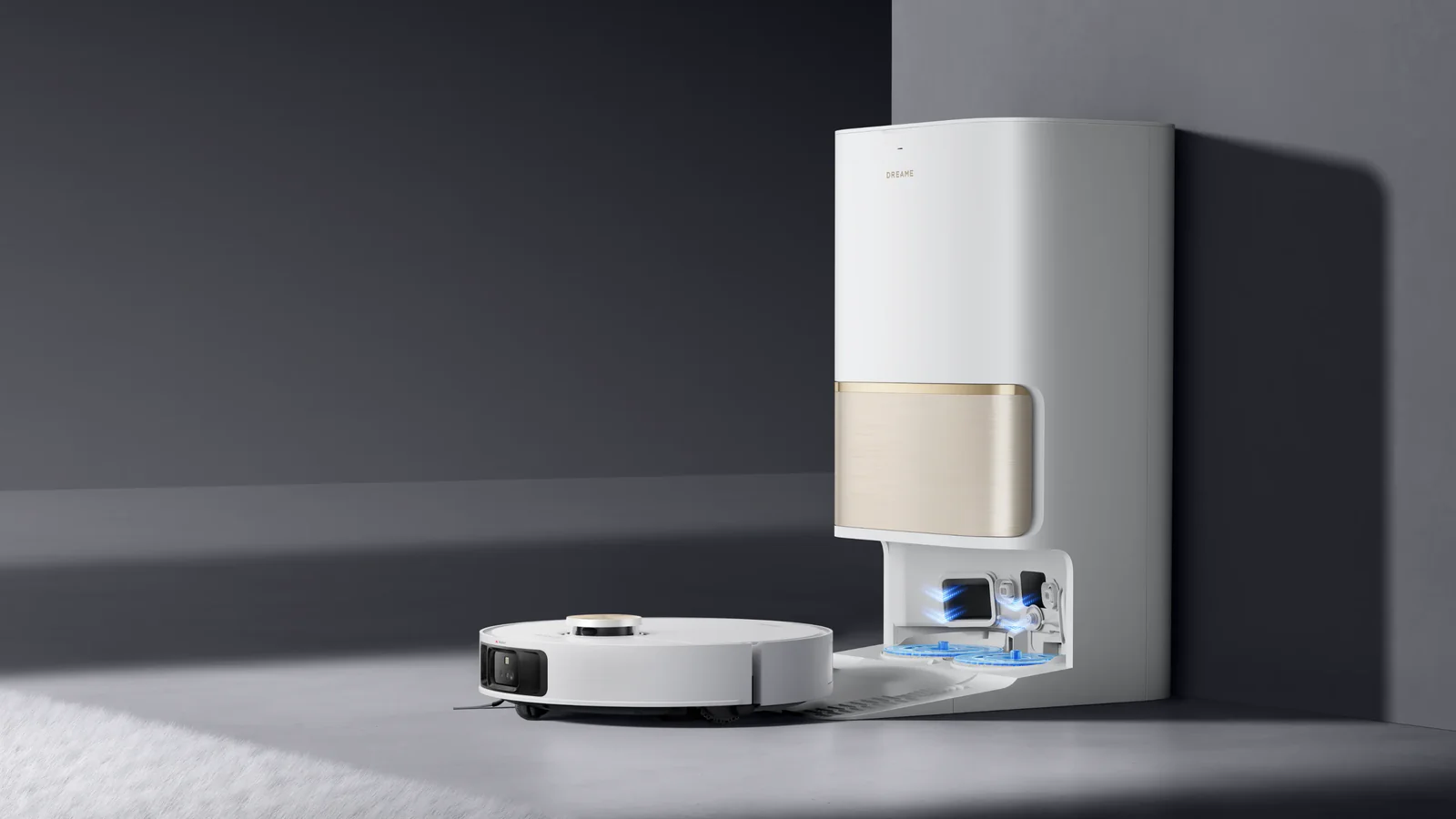
At the end of 2025 we bought a Dreame robot vacuum, the Dream L50 Ultra. The main reason was that it should handle the door thresholds our Roborock Q Revo struggled with. The plan was to move the Q Revo downstairs to replace our now-ancient Roborock S5 Max.
You might see a pattern here: everything was Roborock, and now Dreame entered the household. The two brands are often seen as peers, so I wanted to share my experience after bringing a second brand into the mix. Don’t worry — I’ll keep it short.
What Dreame does right
One of my favorite things is the simple option to vacuum first, mop later. It sits alongside vacuum only, mop only, and mop + vacuum. I love that.
My only real issue with the Q Revo was the tray getting clogged — mostly because the mopping pads would pick up dust. That makes sense, since the mops extend wider than the vacuum brush. I worked around it on Roborock using Routines that would make it vacuum first and then mop. But Routines have been flaky lately, they sometimes disappear from the device screen until I change or reorder them. That makes the Dreame option even more appreciated.
Other than that, the Dreame is pretty quiet and feels like a quality product — mostly. It vibrates in a way none of my other robot vacuums have. If it didn’t, it would be impressively quiet.
What Dreame needs to work on
The app is quite messy, and the translations are lackluster at best. Most of it I can live with, but it’s worth noting. What’s harder to ignore is when the maps suddenly get deleted — which happened twice in just three months. Mapping is fast, so if it doesn’t happen again, I’ll forgive it.
My main gripe, though, is positioning. I placed the robot in our laundry room: out of the way, close to a sink for filling/emptying, and essentially impossible to hear when it runs dust collection. All-around good.
But… it’s also the room with the most change: a laundry basket, bags from weekend trips, a drying rack, etc. Things move around. The robot is set up as a single story (not multiple floors), so it shouldn’t have to “figure out” where it is every time it leaves the dock. And even if it did, there’s usually nothing blocking its path — and two of the four walls are identical and in clear view at any given time since the room is big enough for it.
Still, it insists on doing positioning when it leaves the dock, and just a couple of bags on the floor off to the side can be enough for it to give up. I didn’t expect this at all — this was never an issue with our Roborocks. Quite the opposite: it was more like “So, you changed the entire layout? No problem, I’ll update the map.”
My workaround so far is to tell it exactly which rooms to clean. That somehow reduces the chances of it flipping out. I have to select all rooms, but it works — and honestly, it’s been pretty annoying.
When it comes to Home Assistant, the integrations seem OK, but if that matters to you, make sure your devices are supported. It seems to take a while at times — not complaining, just something to keep in mind.
Would I do it again?
Honestly, if Roborock hadn’t been behind on threshold support, I probably wouldn’t have bought the Dreame. That delay opened the door.
At similar pricing, I’d still choose Roborock if I had the chance. Maybe that’s the tradeoff now — maybe people aren’t willing to wait a bit longer for devices to be tested more thoroughly anymore. None of this is to say Dreame isn’t good: in my limited experience it’s roughly on par under ideal conditions.