If you have needs beyond what Caddy offers, you setup a reverse proxy to Nginx. Let’s look at an example where you would use Nginx for caching. I also added a separate block, in case you want to pass reverse proxy it back to Caddy again.
You may wonder, wouldn’t it be simpler to just run Nginx in that case? Maybe, maybe not. It all depends on your needs.
In the example below I have a WordPress configuration where you could easily switch between passing the request to Nginx and passing it straight to PHP. You would simply change with_nginx to without_nginx. It also shows how you could support for purging URLs for the nginx cache, without exposing the purge URLs beyond access for localhost.
Here are some other posts you may like
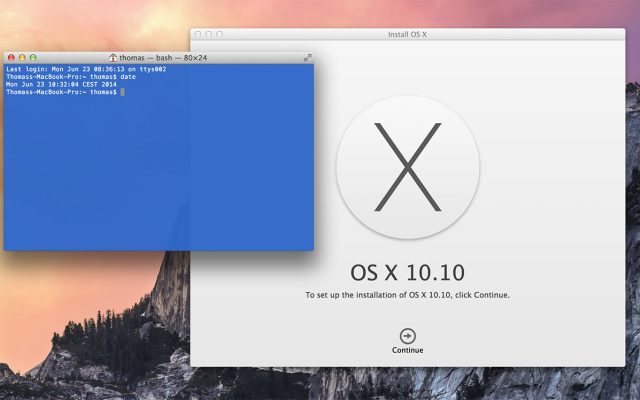
When you're booting your Mac from the recovery partition and are planning to reinstall OS X, you might be met by the following message: An error occurred while preparing the installation. Try running again Now, if you haven't used your Mac for a while, the error might be caused by an…

Electric power companies, in general, are pretty much the same. Tibber however, is unlike any electricity company I had seen before. They try to utilise the data we get from smart devices, which they also sell, to save electricity, money and the environment, as well as improving comfort. It’s a…

At the end of 2025 we bought a Dreame robot vacuum, the Dream L50 Ultra. The main reason was that it should handle the door thresholds our Roborock Q Revo struggled with. The plan was to move the Q Revo downstairs to replace our now-ancient Roborock S5 Max. You might…